

THE RIGHT WORK, AT THE RIGHT TIME
Build care into the details.
A user role, a password-reset flow or a file upload can carry important security decisions. We help product teams work through those decisions alongside everyday development. Security engineering starts by understanding the information your application handles, the people and systems that can access it, and the operations that need stronger protection.
Our agreed scope can include application review, authentication and authorization, dependency checks, safer data handling and release verification. We map role boundaries and test whether the application enforces them, including the APIs behind the interface. Findings are prioritised by their practical impact, with a clear description of the change and the evidence needed to check it.
Security work also needs to remain understandable after handover. We can document access responsibilities, logging choices and the controls your team needs to maintain as the product changes. If you have contractual or regulatory requirements, share them during scoping so the relevant work and specialist involvement can be identified. Formal certification and independent audits are separate engagements, with their own requirements and assessors.
EXPLORE THE SERVICES
A closer look at where we can help.
Choose a service to explore the scope, delivery approach and questions to consider for your project.
Application security review
A focused review of authentication, authorization, data handling and dependency risks within an agreed application scope.
Explore this serviceUser roles and access control engineering
Define and enforce who can read, change and administer information across your application and its APIs.
Explore this serviceApplication data protection engineering
Work through storage, transport, retention and logging choices around the information your product handles.
Explore this serviceSecurity checks for software releases
Turn agreed security requirements and past findings into repeatable checks for the changes your team ships.
Explore this serviceMap the boundaries that matter
We start by understanding the application’s users, sensitive operations and data flows. A role matrix can clarify who may read, change or export information. We look at where those rules are enforced, including backend endpoints and integrations, so the scope follows the actual boundaries of the product.
A focused review needs clear access, test environments and agreed limits. We document findings in terms of impact and practical remediation, then prioritise the work with your team. The result should help developers make a specific change and reviewers understand how it was checked.
Carry the controls through to future releases
Security controls need to remain maintainable as features and responsibilities change. We can document permission rules, review dependency practices and define release checks for the areas in scope. Logging should support investigation without unnecessarily collecting sensitive information, and access to operational tools needs an owner.
If the project has contractual or regulatory obligations, share the actual requirements during discovery. We can identify relevant engineering work and the evidence your team needs to keep. Legal interpretation, independent assurance and formal certification may require qualified external specialists; those roles and deliverables should be agreed explicitly.
THE WORK IN PRACTICE
Explore the Medroof story.
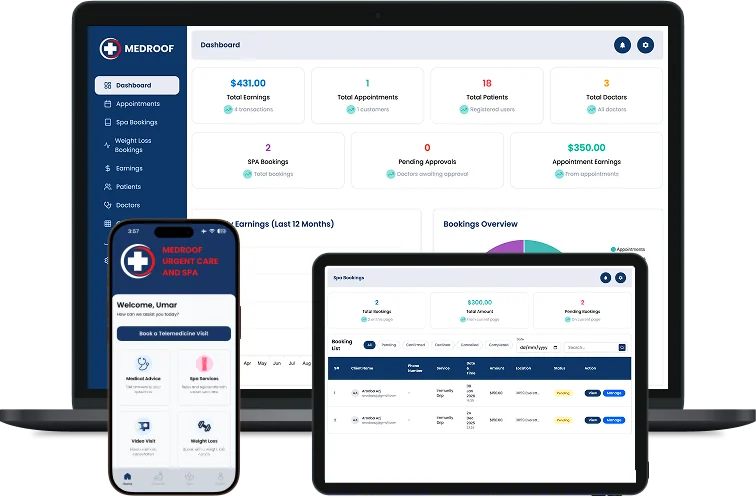
Medroof is a related product story about coordinating different people and workflows in a healthcare platform. Explore the application context behind the screens and role-based journeys.
Read the full case studyClear scope. Visible progress.
A defined project can take a specific outcome through to release. If your priorities change regularly, an ongoing engagement can support a shared backlog. We agree the responsibilities, review points and scope before starting.
Understand the work
We start with your users, business model and current constraints. Bring an idea, a running product or a workflow that causes friction. Together we identify what needs to change and what a useful first outcome looks like.
Shape a practical scope
We connect the user journey to the design, engineering and operational work it needs. Assumptions, dependencies and responsibilities are discussed early, so you can make informed decisions about the first release and the work that follows.
Build with visible progress
Designs, prototypes and working features give us something concrete to discuss. We review progress with you, resolve questions as they arise and test the important journeys. Changes to priorities are considered against the agreed scope.
Launch and keep improving
Release preparation includes the agreed testing, deployment and handover. We make support responsibilities clear and can continue as your product team, improving the experience as you learn from real use and plan the next release.
Frequently asked questions
Is security engineering the same as a formal compliance certification?
No. Our engineering work can help implement and document controls within an agreed application scope. A formal certification or independent audit follows its own standard, assessment process and authorised assessor. If you need one, we discuss that requirement separately and define the engineering support involved.
Can you review user roles and API permissions?
Yes. A focused engagement can map the intended access rules, review how they are enforced and verify agreed fixes. We need representative roles, relevant endpoints and an appropriate test environment. Scope and testing boundaries are agreed before the review begins.
How much does a software development project cost?
The cost depends on the user journeys, integrations, platform requirements, design work and operational needs in the scope. A content website and a subscription app with an admin platform require different work. Share your priorities and budget range so we can discuss a practical first release, the assumptions behind an estimate and what can be delivered later.
Do you offer ongoing development after launch?
Yes. An ongoing engagement can cover planned improvements, maintenance, fixes and release support. We can work with a defined project scope or a monthly bank of hours as priorities evolve. Before starting, we agree how work is prioritised, what support is included and how progress is reviewed, so the arrangement fits the way your team operates.