

A fitness app earns repeat use when it helps people fit a useful activity into real life. Badges, streaks, and leaderboards can support that experience, but they cannot compensate for confusing plans, unreliable playback, or a product that makes users feel they have failed whenever their routine changes.
Consider an illustrative membership product offering guided workouts and progress tracking. A new member may need help choosing a manageable starting point. A returning member may want to resume a plan quickly. Someone coming back after a break may need an encouraging reset rather than a screen dominated by a lost streak. These are distinct product moments.
This guide focuses on software and experience design, not exercise prescriptions or medical outcomes. It covers onboarding, content structure, progress, motivation, media reliability, subscriptions, and measurement. Training content and health-related claims should be reviewed by appropriately qualified people for the intended audience.
Key takeaways
- Make the first useful session easier before adding more engagement mechanics.
- Track progress in ways that accommodate breaks, different goals, and user control.
- Treat media playback, saved plans, and subscription access as core reliability requirements.
- Measure meaningful repeat activity and user feedback rather than rewarding compulsive app opening.
Choose a clear audience and a realistic job
A beginner building a routine, an experienced athlete recording sessions, and a coach managing clients need different products. Choose the initial audience and describe the job the app helps them accomplish. A broad promise to serve everyone usually produces a crowded interface and unclear recommendations.
Interview users about their current routine, available equipment, time constraints, and reasons for stopping previous apps. Ask them to describe a recent day rather than only their ideal behavior. The gap between intention and circumstances often reveals the most useful product opportunities.
Separate the app’s job from the training program’s expertise. Software can make a plan understandable, track activity, and provide timely reminders. It should not make unsupported claims about outcomes or silently provide personalized medical advice. Define how content is reviewed and who is responsible for its suitability.
Use the audience definition to decide what not to build. A social competition feature may be irrelevant to users seeking private, low-pressure activity. An advanced tracking dashboard may distract beginners from choosing their first session. Focus creates a more coherent experience than accumulating popular fitness-app features.
Make onboarding produce an immediately useful next step
Ask only for information needed to shape the initial experience. Long questionnaires can feel productive to the business while delaying value for the user. Explain why a question matters and allow a reasonable path when someone does not know the answer.
Turn onboarding into a useful recommendation or starting view. If the app asks about available time, the first screen should reflect that choice. If it asks about equipment, do not immediately recommend content requiring something the user said they do not have.
Avoid treating preferences as permanent facts. Goals, schedules, equipment, and confidence change. Make it easy to adjust a plan without restarting the account or feeling that previous progress has been erased.
Test onboarding with people unfamiliar with the product. Observe whether they can choose a session and understand what will happen next without explanation from the team. A successful onboarding flow is not simply one with a high completion rate; it should lead to a first activity that feels appropriate and achievable.
Build a content model that supports discovery and change
Describe content with consistent metadata such as duration, equipment, format, instructor, level, and relevant prerequisites. Let qualified content owners define the terminology. Inconsistent labels make filtering and recommendations unreliable even when the interface looks polished.
Separate a program from an individual session. A program can organize progression and scheduling, while a session contains the specific media and instructions. This distinction helps the product support rescheduling, substitutions, and returning to a favorite session without duplicating content records.
Version important content changes. If instructions or media are updated, decide what a returning user sees and how saved plans are affected. Preserve enough history to understand which content a member used when investigating feedback or a support issue.
Create an editorial workflow for drafting, reviewing, publishing, and retiring content. A large library is only useful if its information remains accurate and discoverable. The administrative experience deserves design attention because content teams will shape much of the product’s long-term quality.
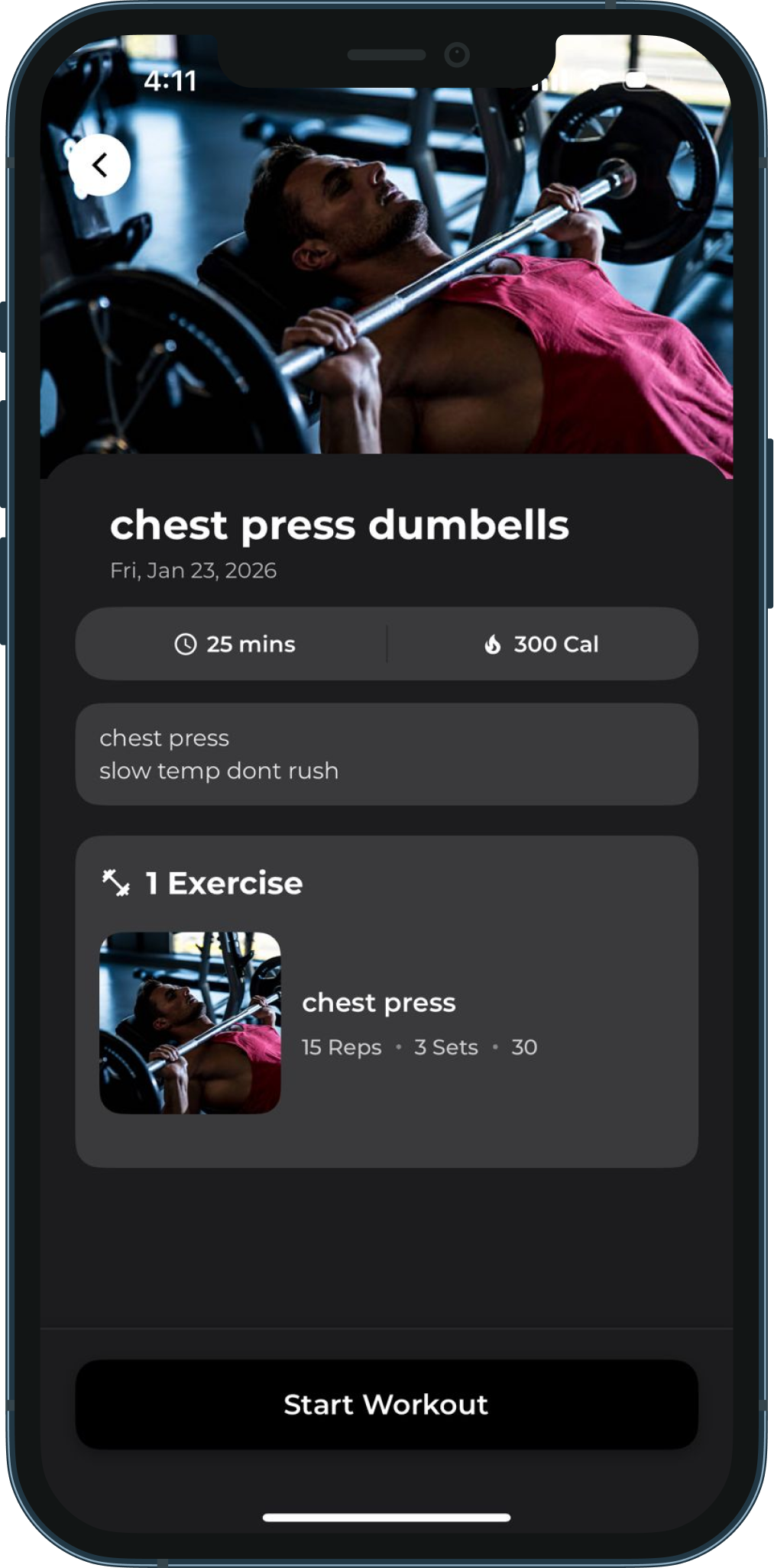
A session needs usable detail before it needs a badge
Make progress informative rather than punitive
Show progress in terms that match the user’s goal and the product’s scope. Completed sessions, consistency over a flexible period, and personal notes can be useful. Avoid implying that a single number fully represents someone’s health, effort, or worth.
Allow breaks and changes in routine. A member returning after travel, illness, or a busy period should see a clear way to continue. Consider a restart flow that preserves history while helping them choose an appropriate next step, with training guidance reviewed by qualified content owners.
Distinguish recorded activity from inferred outcomes. Completing a video does not prove that every exercise was performed or that a health outcome occurred. Labels and analytics should reflect what the software actually observed.
Give users control over sensitive progress displays and social sharing. Some people enjoy comparison; others prefer privacy. A product can support motivation without making public rankings or body-related measurements the default definition of success.
Use gamification only when it supports the activity
A streak can remind a user of a routine, but it can also make a missed day feel like losing all progress. Decide what behavior a mechanic encourages and whether that behavior is appropriate for the content and audience. More daily app openings are not automatically a better outcome.
Prefer rewards that acknowledge meaningful participation without pressuring people to overdo an activity. Flexible weekly goals, milestones chosen by the user, and recognition of returning after a break may fit some products better than rigid daily targets. Validate the approach with the intended users.
Keep mechanics understandable. If points are awarded, explain what they represent and avoid changing rules in ways that make progress feel arbitrary. Do not use artificial scarcity or misleading urgency to push subscriptions or activity.
Measure whether the mechanic improves the intended experience. Compare task completion, repeat use, satisfaction, and signs of frustration. If a badge system creates support questions or distracts from choosing a useful session, remove or simplify it rather than adding another layer of rewards.
Building a fitness experience for your members?
Share your coaching model and content. We can help shape the training, progress, and member journeys.
Treat media playback as a core product workflow
For a guided-content app, playback is not a decorative feature. Test starting, pausing, seeking, resuming, interruptions, device rotation, and changes in network quality. A user should not lose their place because they briefly leave the screen.
Design loading and failure states that explain what is happening. If a video cannot load, offer a controlled retry and preserve context. If audio continues in the background, make the behavior and controls understandable. Validate actual platform capabilities rather than assuming every device behaves the same way.
If downloads are supported, show storage requirements, progress, expiry where relevant, and how to remove content. Handle interrupted downloads and account changes deliberately. A downloaded asset should not create an unclear entitlement or privacy state after the user signs out.
Optimize media for the audience’s devices and connections. Use appropriate formats and delivery settings, then measure startup and interruption behavior with realistic network conditions. A large content library adds little value if the first session repeatedly stalls.
Make reminders and social features optional and specific
Ask users whether reminders fit their routine and let them choose timing where practical. A reminder should help with a task they intended to do, not merely draw attention back to the application. Provide a clear way to change or disable it.
Avoid notification language that shames users for inactivity. People have legitimate reasons to pause, and the software has limited context about their circumstances. A neutral invitation to continue can be more appropriate than a warning that progress is being lost.
If the product includes community features, define moderation, reporting, privacy, and the intended interaction. A leaderboard, direct messaging, and a coach-led group each create different operational responsibilities. Do not add a social feed without planning how harmful or misleading content will be handled.
Test the value of social features separately from the core program. Some audiences may benefit from accountability groups, while others may prefer a private experience. Let evidence guide expansion rather than assuming social engagement is a required ingredient in every fitness product.
Handle subscriptions and account access transparently
Show what the subscription includes, how access changes during trials or cancellations, and where users can manage their plan. Use the current platform and payment rules that apply to the product, and verify them directly during implementation because commercial requirements can change.
Keep entitlement decisions authoritative on the server while supporting a usable client experience. A successful checkout screen is not the only evidence of payment state. Account for renewals, failures, refunds, restored purchases where relevant, and users changing devices.
Explain what remains available after cancellation. The product may retain history or allow access until an agreed period ends, depending on its terms. Make the behavior clear and consistent rather than leaving users to discover it after paying.
Test support scenarios with realistic account states. A member who paid but cannot access content needs a diagnosable path, and support should be able to distinguish an account mismatch from a provider delay. Subscription reliability directly affects trust in the rest of the product.
Measure retention through meaningful cohorts
Define activation around a useful first experience, such as completing a chosen session or creating a plan the user can follow. Account creation and permission acceptance are steps in the journey, not evidence that the product delivered value.
Measure repeat activity over a period that fits the intended routine. Daily retention may be inappropriate for a product designed around several sessions per week. Segment new members, returning members, different goals, and different content types so averages do not hide a poor experience for a particular group.
Combine behavior with feedback. A session may be abandoned because the content was unsuitable, playback failed, or the user was interrupted. The event alone does not explain why. Use lightweight feedback and research to interpret patterns without making users complete lengthy surveys.
Avoid claiming health improvements from engagement data. The app can report recorded usage and user-reported experiences, but stronger outcome claims require appropriate evidence and review. Keep marketing, analytics, and product language aligned with what the data actually supports.
Plan a release around one complete member experience
Choose a focused first release: a clear audience, a manageable content library, dependable playback, basic progress, and understandable account access. Include the administrative tools needed to keep that experience working. A large collection of unfinished features makes it harder to identify why members return or leave.
Run a pilot with realistic routines and devices. Ask participants to use the product in their ordinary setting rather than only during a guided demonstration. Observe the moments where they switch tools, forget the app, or need help resuming.
Prioritize improvements according to the member journey. Fix unreliable playback and confusing plan selection before adding elaborate rewards. Use the evidence to decide whether the next investment belongs in content, navigation, personalization, or operations. A sustainable fitness product grows by making its core activity easier to return to, with motivation features supporting that value rather than replacing it.
Frequently asked questions
Do streaks improve fitness-app retention?
They can support some routines, but the effect depends on the audience and design. Rigid streaks can also discourage people after a break. Test them against meaningful repeat activity and user feedback, offer flexibility, and avoid encouraging behavior that conflicts with reviewed training guidance or user wellbeing.
What should a fitness MVP include?
A defined audience, a useful starting flow, reviewed content, reliable playback or tracking, basic progress, and clear account access. The content-management and support workflows also matter. Add social features, advanced recommendations, and complex rewards only when evidence shows they address a real member need.
Should an app integrate with health platforms immediately?
Only when the integration supports a specific task. It adds permissions, data-handling responsibilities, platform testing, and support cases. Validate the user value first, review current platform requirements, and request only the data needed. A broad integration can add complexity without improving the core experience.
Can AI personalize every workout safely?
Do not assume that it can. The appropriate scope depends on the product, audience, evidence, and professional oversight. Software teams should define boundaries with qualified content and clinical experts where relevant. An assistant that helps navigate approved content is a different feature from generating individualized training or medical guidance.
Let’s work through your next step.
Tell us what you’re building, what you’ve tried, and where you need a hand. We’ll work with you to define a practical way forward.