

Workforce platform / CASE STUDY
HFS: a clearer path from shift to payment.
A connected experience for freelancers, companies, and the people coordinating their work.
 THE PRODUCT IN FOCUS
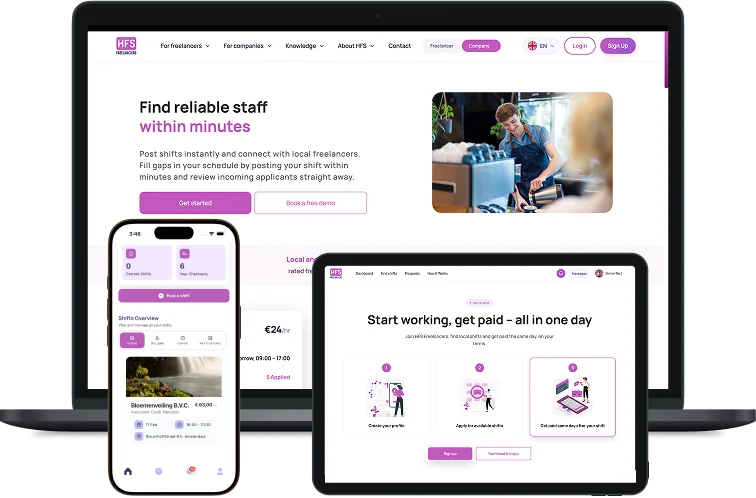
- BUILT FOR
- Freelancers, companies & staffing coordinators
- OUR ROLE
- Product design · Web development · Mobile development · Workflow automation
- THE PRODUCT
- Web & mobile
01 /THE BRIEF
A shift is one event. The work around it is a whole system.
A company needs people for a shift. A freelancer needs to understand the opportunity, get ready to work and know what happens afterward. A coordinator needs a clear view of the activity on both sides. Those are different perspectives on the same piece of work, and a staffing platform has to connect them.
HFS brings freelancer onboarding, shift allocation and payment workflows into a shared product. MUBBITS worked across product design, web development, mobile development and workflow automation. The challenge was to give each role a useful interface while keeping the journey from joining the platform to completing work coherent.
The product story is therefore about handoffs. Information collected during onboarding influences how a freelancer participates. A shift moves from a company requirement to an assignment. Payment needs a relationship to the work it follows. Treating these as connected journeys gives the platform a clearer structure than a collection of separate forms and dashboards.
02 /INSIDE THE EXPERIENCE
The decisions behind the screens.
Original project visuals, with the journeys and thinking that connect them.
 View full size
01 / GETTING READY
Make joining the platform a structured journey.
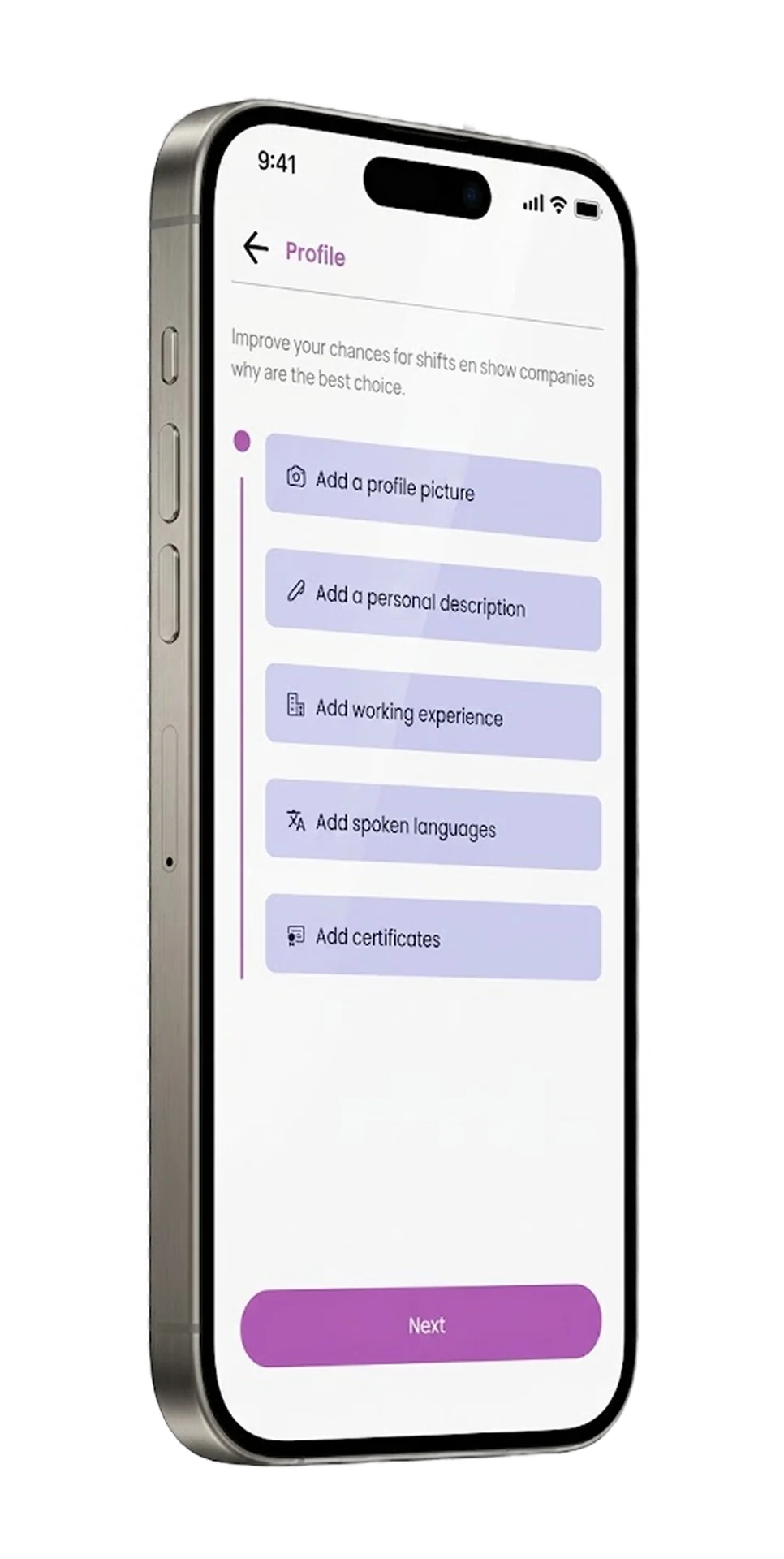
Onboarding is the first operational workflow, not just the first screen. A freelancer needs to provide the information required to participate, and the platform needs to make those steps understandable. HFS presents profile setup as a sequence of recognizable tasks instead of one undifferentiated block of information.
The original interface groups the profile sections and keeps the next action visible. This gives a user a way to understand what belongs in their profile and move through the setup. It also establishes a reusable visual pattern for structured tasks elsewhere in the app.
For the business, a consistent onboarding path creates a common starting point for later activity. For the freelancer, it helps answer a more immediate question: what do I need to do before I can use this platform? Both perspectives informed how the journey is presented.
 View full size
02 / COORDINATING WORK
Bring the assignment into focus.
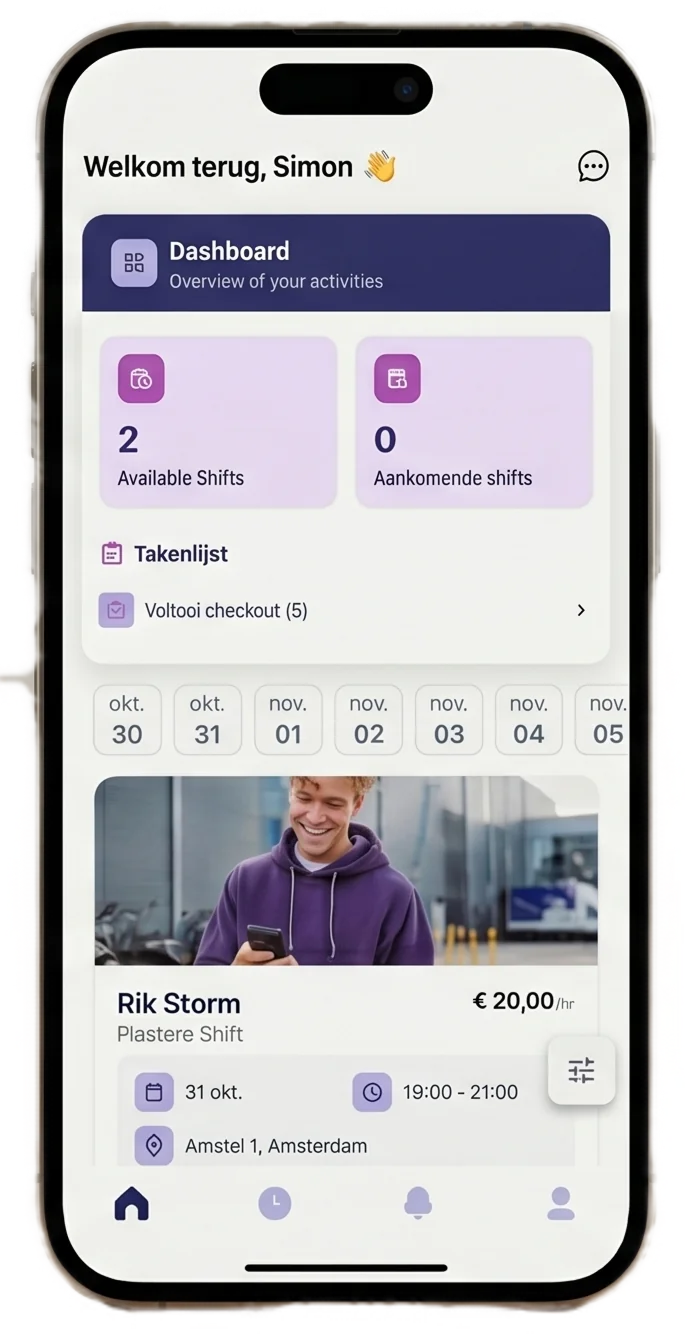
The shift experience connects the opportunity with the people responsible for it. A useful staffing dashboard has to distinguish between a broad overview and the detail needed to act. HFS brings the current activity and relevant assignment information into a view that can be understood on a mobile screen.
The product visuals show summaries alongside individual assignments and people. That hierarchy helps someone move from understanding what is happening to examining a particular piece of work. The same journey has different needs for a freelancer choosing work and a coordinator managing it, so the platform uses role-specific interfaces.
This is an important distinction in workforce software: a dashboard is valuable when it leads to a clear action. The design organizes the information around the work being coordinated, keeping the relationship between the overview and the assignment visible.
 View full size
03 / CLOSING THE LOOP
Keep payment connected to the work.
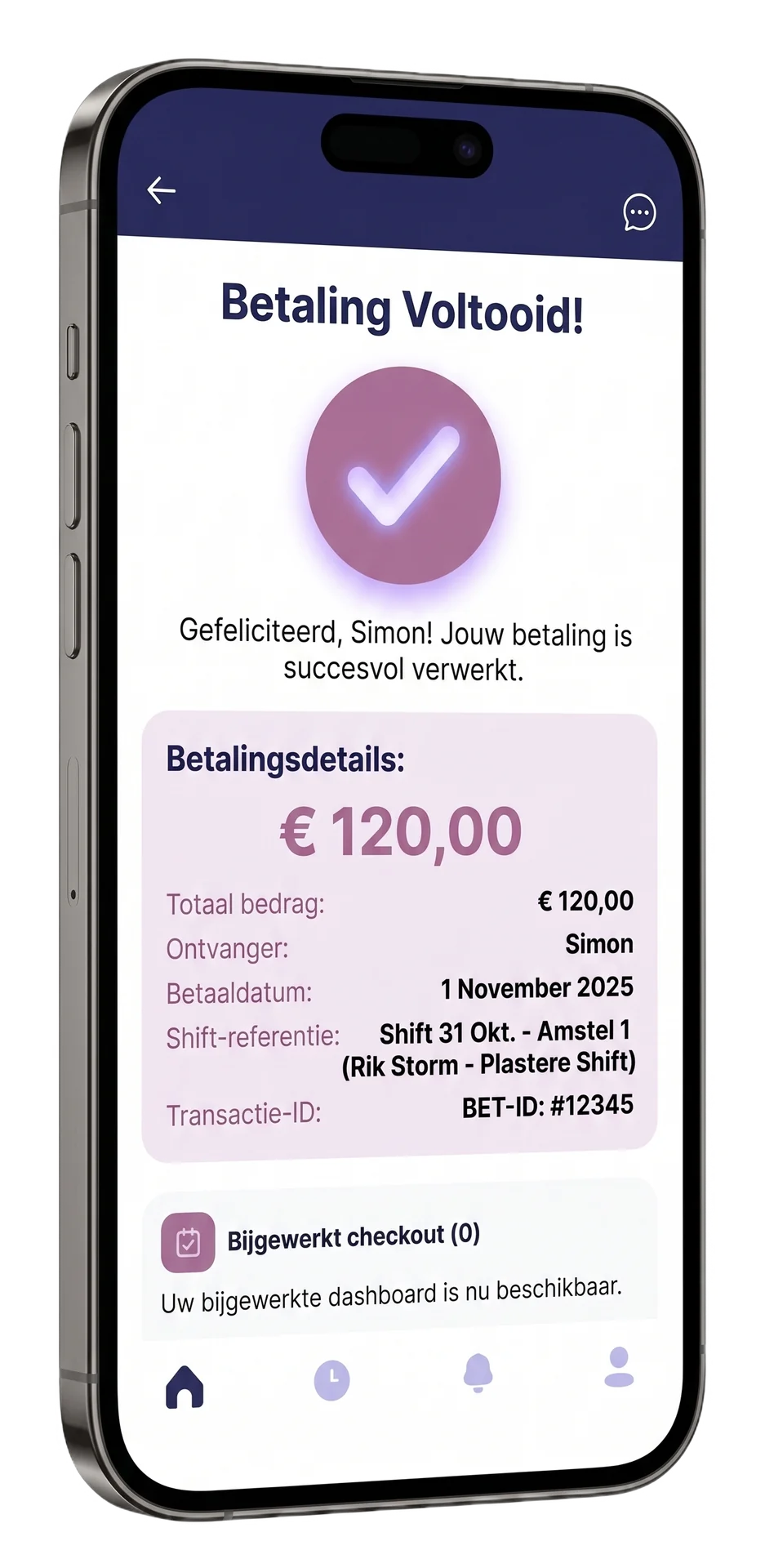
The experience does not end when a shift is assigned. Payment is another part of the same relationship between the freelancer and the company. HFS includes a payment workflow that presents the outcome and relevant details together, so the user has more than a generic success message.
The payment screen makes completion explicit and gives the transaction details a clear hierarchy. That is a small but important part of confidence in an operational product: people need to understand the state of a process and what the confirmation relates to.
Connecting onboarding, shifts and payment also gives the wider platform a coherent narrative. Each step follows from the one before it. The design and development scope brings those moments into the same system so the product can support the full workflow around staffing.
03 /DESIGN MEETS ENGINEERING
The thinking beneath the interface.
Different roles, connected information
Freelancers, companies and administrators need different views of the same activity. The product scope separates those experiences while connecting the workflows between them. That relationship is central to the architecture: information has to remain useful when the person viewing it changes, and each person needs the appropriate next action.
Web tools and mobile access
Next.js and React Native are part of the HFS stack. The web experience supports the platform’s broader workflows, while mobile puts important actions within reach of people using the product around their working day. A shared visual language helps keep the experiences connected as people move between different contexts.
Automation around an understandable process
Firebase and cloud integrations support the connected application. Workflow automation is most useful when the underlying stages are explicit: joining, preparing, allocating and completing. The interface needs to communicate those stages so people can understand the work rather than simply see that something happened. That makes the workflow part of the product design.
04 /THE OUTCOME
One product for the work around every shift.
The delivered scope brings freelancer, company and administrative workflows into a shared staffing platform. Onboarding, allocation and payment each have a place in the product, with interfaces that reflect the people using them. The outcome is a connected operational experience across web and mobile.
For another marketplace or workforce business, the useful lesson is to define the complete journey before treating each feature as a separate request. The difficult parts often sit between stages: the move from profile to participation, requirement to assignment, or completed work to payment. HFS shows how those relationships can shape the product structure.
05 /BEFORE YOUR NEXT BUILD
A little more detail.
Questions about the project and planning something similar.
What kind of platform is HFS?
HFS is a staffing and workforce platform connecting freelancers, companies and the people coordinating their work. Its documented scope includes onboarding, shift allocation, dashboards and payment workflows. The case study shows how these pieces fit together across web and mobile rather than describing a standalone job listing website.
Can MUBBITS build a marketplace with different user roles?
Yes. We can help map the roles, actions and handoffs before designing the interfaces and backend workflows. For a staffing marketplace, that means understanding what a freelancer, company and coordinator need to see and do at each stage. The permissions and operational rules then become part of the product scope.
How would you approach an existing staffing system?
We would start with the current workflow and the points where your team leaves the system to finish a task elsewhere. That may reveal disconnected onboarding, difficult allocation or unclear payment status. A phased plan can focus on one complete journey first, while accounting for the integrations and data needed by the next phase.
What information helps scope a workforce platform?
Share the roles involved, how a shift is created and assigned, what users must provide before working, and how payment is handled today. Examples of forms, spreadsheets or an existing product are useful. Region-specific payment, tax and verification requirements should be identified during discovery so the proposed scope reflects your operation.
THE CAPABILITIES BEHIND THE WORK
Where we can help you next.
YOUR PRODUCT / THE NEXT CHAPTER
Does your workflow live in too many places?
Walk us through one job from beginning to end. We’ll help identify the roles, handoffs and integrations a connected platform needs.
Map your platform with usUsually replies within one business day.- 01Share the problem and where you are today.
- 02Talk through the users, priorities and constraints.
- 03Shape a practical scope and a clear next step.