

B2B commerce / CASE STUDY
Tech Micro USA: connecting the whole order journey.
An enterprise hardware platform connecting the storefront with the work behind orders, shipping, and financial operations.
 THE PRODUCT IN FOCUS
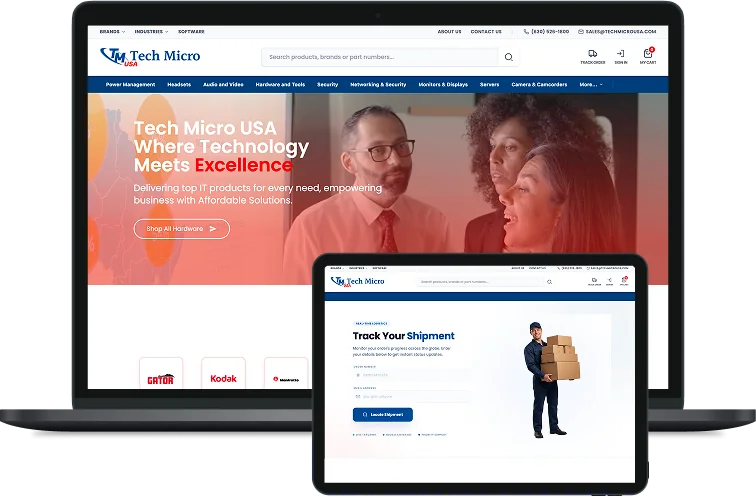
- BUILT FOR
- Business buyers & commerce operations teams
- OUR ROLE
- Web development · Commerce · API integrations · Cloud infrastructure
- THE PRODUCT
- Web storefront & operational tools
01 /THE BRIEF
The storefront is only the first part of an order.
A business buying hardware needs to find the right product, understand its details and place an order. The team fulfilling it has a different set of tasks: managing the order, coordinating shipment, handling exceptions and keeping financial records aligned. Tech Micro USA needed those parts to connect within a broader commerce platform.
MUBBITS worked on the customer-facing web experience alongside the operational tools and integrations behind it. The scope covers enterprise hardware commerce, carrier connections, payment services and accounting integration. This makes the case as much about business workflow as it is about the online store.
The core problem was fragmented context. Product, order, shipping and financial information serve different purposes, but all relate to the same transaction. A connected platform should preserve those relationships so a buyer or operator can understand the next step without rebuilding the order’s story from separate systems.
02 /INSIDE THE EXPERIENCE
The decisions behind the screens.
Original project visuals, with the journeys and thinking that connect them.
 View full size
01 / PRODUCT DISCOVERY
Help business buyers narrow the choice.
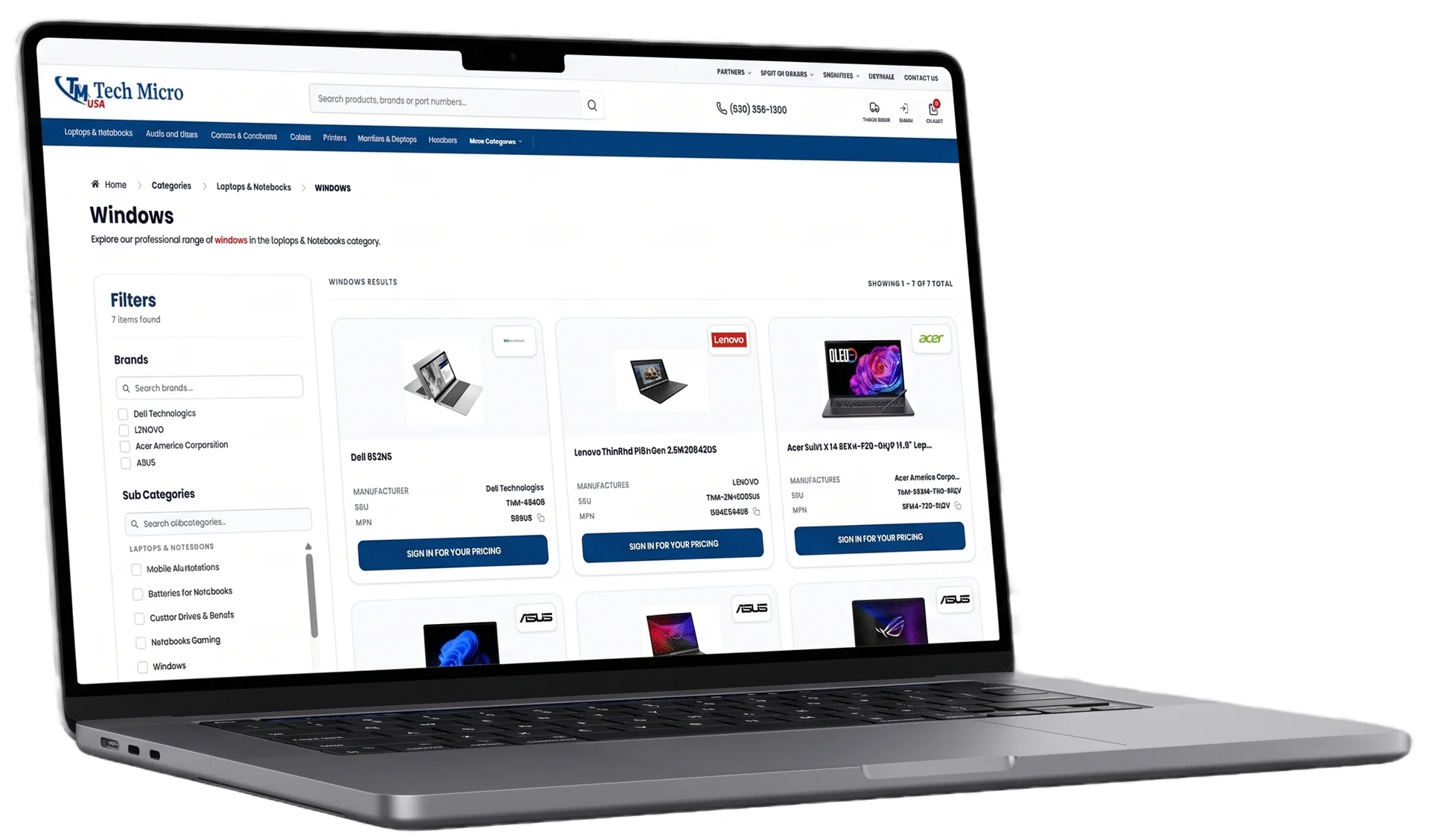
Enterprise hardware shopping starts with a specific need, but the catalog can contain many possible answers. Product categories, filters and consistent cards help a buyer move from a broad requirement to a manageable set of options. The Tech Micro USA storefront makes that browsing structure visible alongside the products.
The original category screen shows filtering and product presentation working together. A buyer can inspect the range without losing the context of the category. Consistency matters here: product information should be presented in a predictable order so attention can go to the differences between items.
This part of B2B ecommerce development is about decision support. A clear catalog structure prepares the next step by helping someone identify which product deserves a closer look. It also creates a recognizable foundation for additional categories as the offering changes.
 View full size
02 / PURCHASE CONTEXT
Put the product details beside the decision.
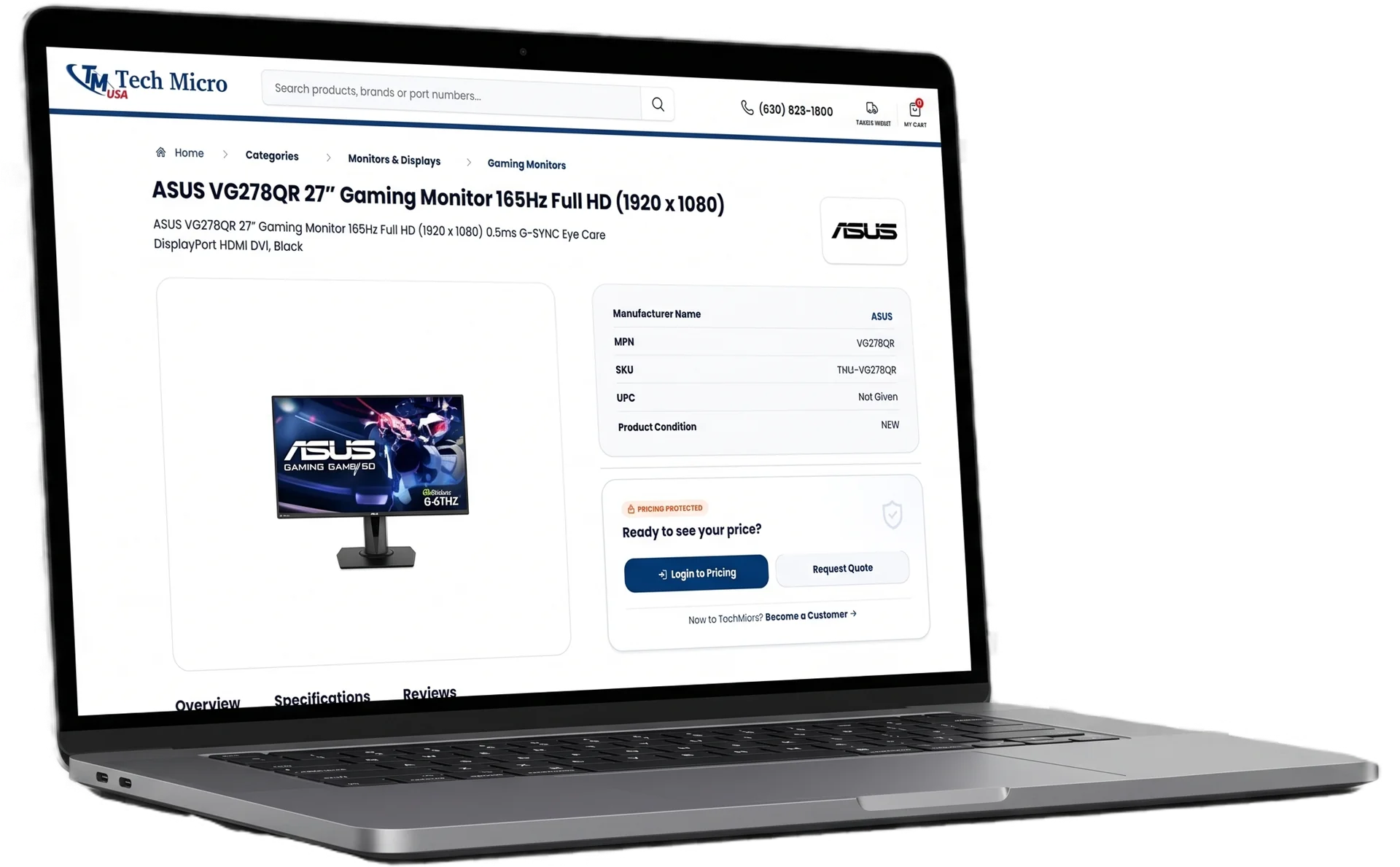
The product detail page brings the selected item into focus. Product imagery, the description, price and purchasing controls have to work as a single decision point. In a hardware store, the page also needs room for the specific information that distinguishes one model or configuration from another.
Tech Micro USA’s interface gives the item a dedicated page with a clear hierarchy between its identity, details and purchase action. That hierarchy connects the browsing experience to an order without making the buyer restart their search for essential information.
The operational scope continues beyond that click. Orders have to relate to the payment and fulfillment workflows behind the storefront. Building the customer-facing experience alongside those connections keeps the transaction at the center of the product rather than treating checkout as an isolated endpoint.
 View full size
03 / AFTER THE ORDER
Keep delivery part of the experience.
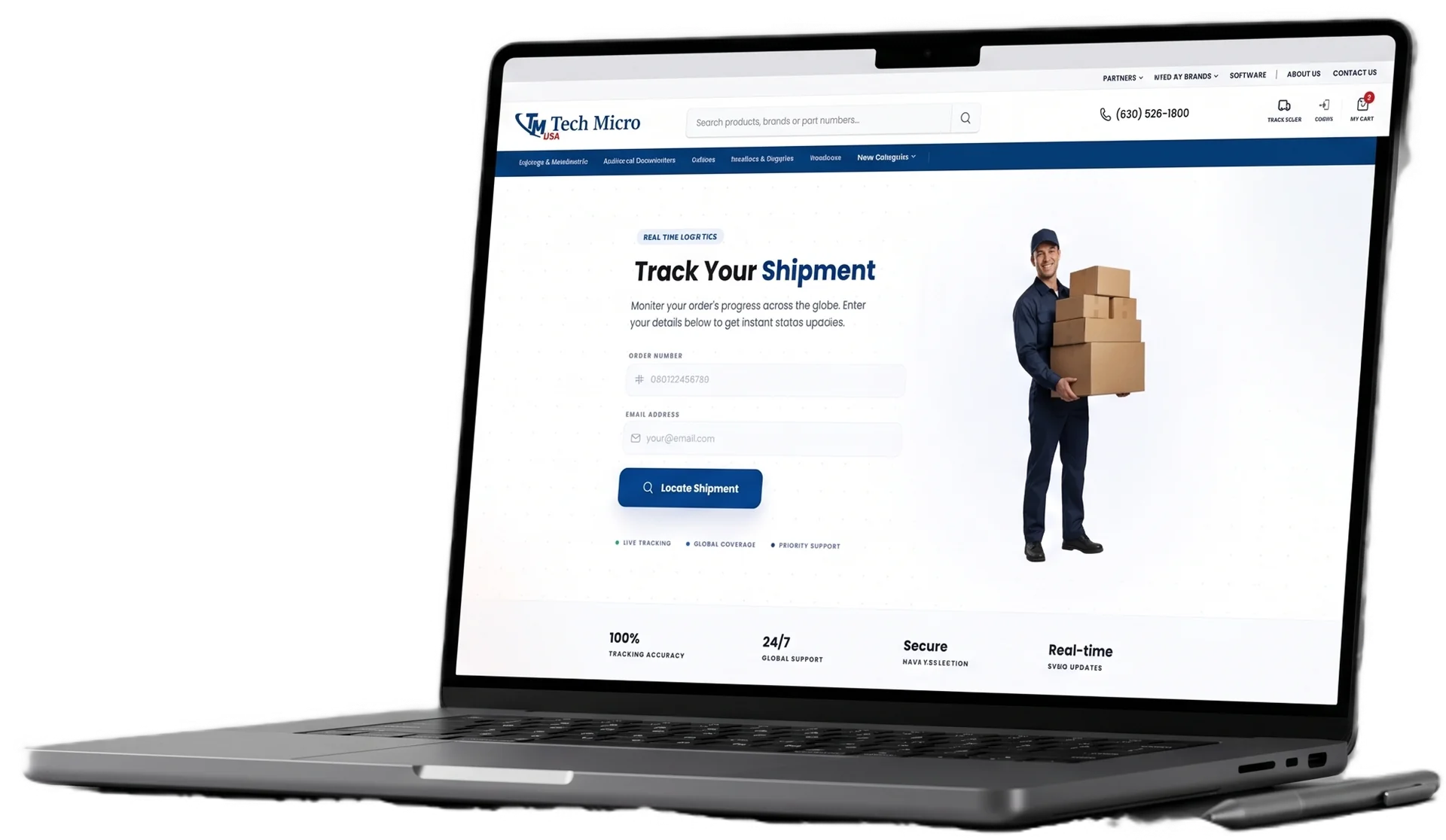
Customers still need useful information after purchasing. The shipment tracking screen gives that stage a place in the storefront, while carrier integrations connect the wider platform to fulfillment activity. The original project scope includes FedEx and UPS alongside workflows for labels, pricing and disputes.
On the operations side, the relationship between order, shipment and financial record matters just as much. QuickBooks and Authorize.net are part of the integration landscape, linking the commerce platform with accounting and payment services. These connections address different tasks within the same order lifecycle.
A connected order journey also has to account for exceptions. Returns, disputes and reconciliation belong in the operational story because the work does not always end at delivery. Bringing these activities into the scope gives the business a more complete way to manage commerce.
03 /DESIGN MEETS ENGINEERING
The thinking beneath the interface.
A storefront connected to operations
The customer interface and internal workflows are parts of the same product scope. Product discovery and purchasing establish the transaction; fulfillment and reconciliation carry it forward. Connecting them gives the platform a practical structure around the complete lifecycle of an order, including the work that customers never see.
Integrations with defined responsibilities
Carrier services support shipping workflows, Authorize.net supports payment integration and QuickBooks connects the accounting side. Treating each connection as part of a named business process makes the integration work easier to reason about than treating it as a list of unrelated APIs. Each service has a place in the order journey.
Cloud services behind the web experience
AWS and Firebase are included in the project’s technical foundation alongside Next.js. The infrastructure supports the application and its connected services. The architectural question is how to keep the customer experience and operational information coordinated as orders move through different stages and different systems contribute their part.
04 /THE OUTCOME
Commerce with the operational story connected.
The delivered platform connects the enterprise hardware storefront with the workflows behind orders, shipping and financial operations. Buyers have a path from catalog browsing to product details and tracking, while the business has connected tools for the work around the transaction.
For a company planning an ecommerce rebuild, the takeaway is to scope the order lifecycle early. A strong storefront is important, but the integration work determines how well the business can carry the order through fulfillment and handle what follows. Tech Micro USA brings both sides into the same development story.
05 /BEFORE YOUR NEXT BUILD
A little more detail.
Questions about the project and planning something similar.
What did MUBBITS build for Tech Micro USA?
The scope included web development, commerce workflows, API integrations and cloud infrastructure. The case study covers the hardware storefront and the connected work around orders, shipping, pricing, disputes and financial records. The live website is linked here so you can explore the customer-facing experience.
Can you connect ecommerce with shipping and accounting tools?
Yes. We can plan and implement integrations around the services your business uses. Tech Micro USA’s documented scope includes carrier connections, QuickBooks and Authorize.net. For a new engagement, we would confirm the available APIs, required data, ownership of each process and how your team should handle exceptions.
Do we need a completely new storefront to improve operations?
Not necessarily. The first step is to understand the current store, the systems behind it and where information has to be transferred manually. The most useful initial scope may be an integration or an internal tool. A full rebuild makes sense when the existing structure prevents the experience or workflows the business needs.
What should we bring to an ecommerce discovery discussion?
Bring your storefront, catalog structure and the systems used for payment, shipping and accounting. Walk us through an ordinary order and one that needs special handling. Those examples help define the real integration scope, customer-facing improvements and a practical sequence for implementation.
THE CAPABILITIES BEHIND THE WORK
Where we can help you next.
YOUR PRODUCT / THE NEXT CHAPTER
Ready to connect the work behind your store?
Show us how an order moves through your business today. We’ll help shape the storefront, integrations and operational improvements around the same journey.
Discuss your commerce platformUsually replies within one business day.- 01Share the problem and where you are today.
- 02Talk through the users, priorities and constraints.
- 03Shape a practical scope and a clear next step.